
The U.S. economy continues to navigate a complex landscape shaped by domestic policies and global events. Recent assessments provide insights into growth projections, inflation trends, and potential challenges ahead.
Economic Growth and Inflation
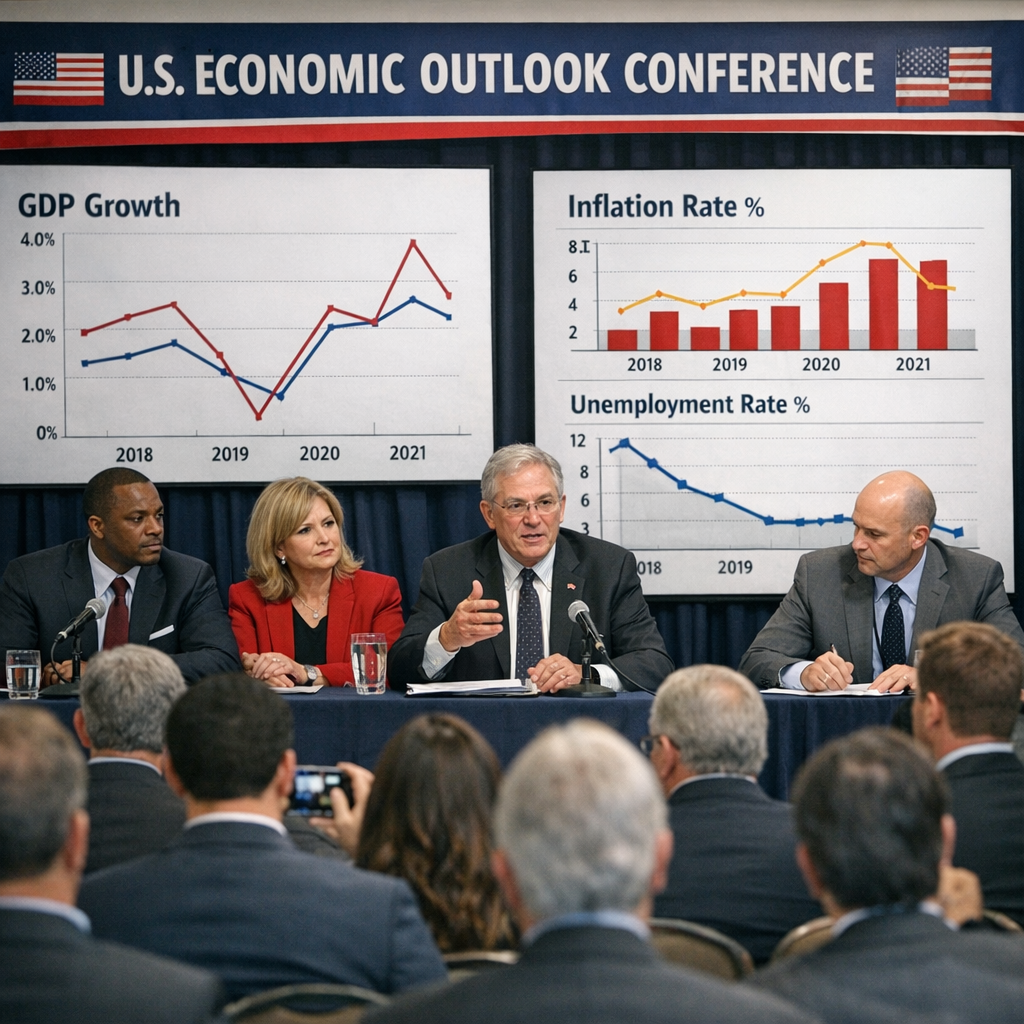
The International Monetary Fund (IMF) projects the U.S. economy to grow by 2.4% in the fourth quarter of 2026, an increase from 2.2% the previous year. Unemployment is expected to decline to 4.1% in 2026, with inflation anticipated to reach the Federal Reserve’s 2% target by 2027. However, the IMF warns that rising federal budget debts pose a growing stability risk.
National Debt Concerns
BlackRock CEO Larry Fink has expressed concerns about the escalating U.S. national debt, emphasizing that increasing debt levels could lead to higher interest costs and potentially erode economic confidence. As of January 2026, the total U.S. debt stood at $38.4 trillion, with interest expenses rising significantly.
Labor Market Resilience
Despite global uncertainties, the U.S. labor market has shown resilience. In April 2025, job growth slowed marginally, but the unemployment rate remained steady at 4.2%. Employers continued to retain workers, indicating confidence in the economy’s stability.
Global Economic Outlook
On a global scale, the IMF’s April 2026 World Economic Outlook projects a slowdown in growth to 3.1% for 2026, influenced by ongoing conflicts and geopolitical uncertainties. Inflation is expected to rise to 4.4% before declining in 2027. Emerging markets and developing economies, particularly those reliant on commodity imports, are anticipated to face significant challenges.
As the U.S. economy continues to evolve, staying informed about these developments is crucial for understanding the broader economic landscape and its potential impact on local communities.